Roof and gutter heat cable · Greater Cleveland
Stop the ice dam at the roof edge, before the water gets inside.
We run self-regulating heat cable along the eave, through the gutter, and down every downspout. Meltwater reaches the ground instead of your ceiling. Most homes take one day.
- Licensed and insured
- 10-year cable warranty
- 5-year labor guarantee
- Free on-site assessment
What happened on your roof last February
Attic heat melts the snow. The cold eave freezes it again.
Cleveland swings above and below freezing from December to March. Every swing adds a layer.
Heat leaks out of the attic
It melts the snow on the upper roof from underneath, even when it's 20°F outside.
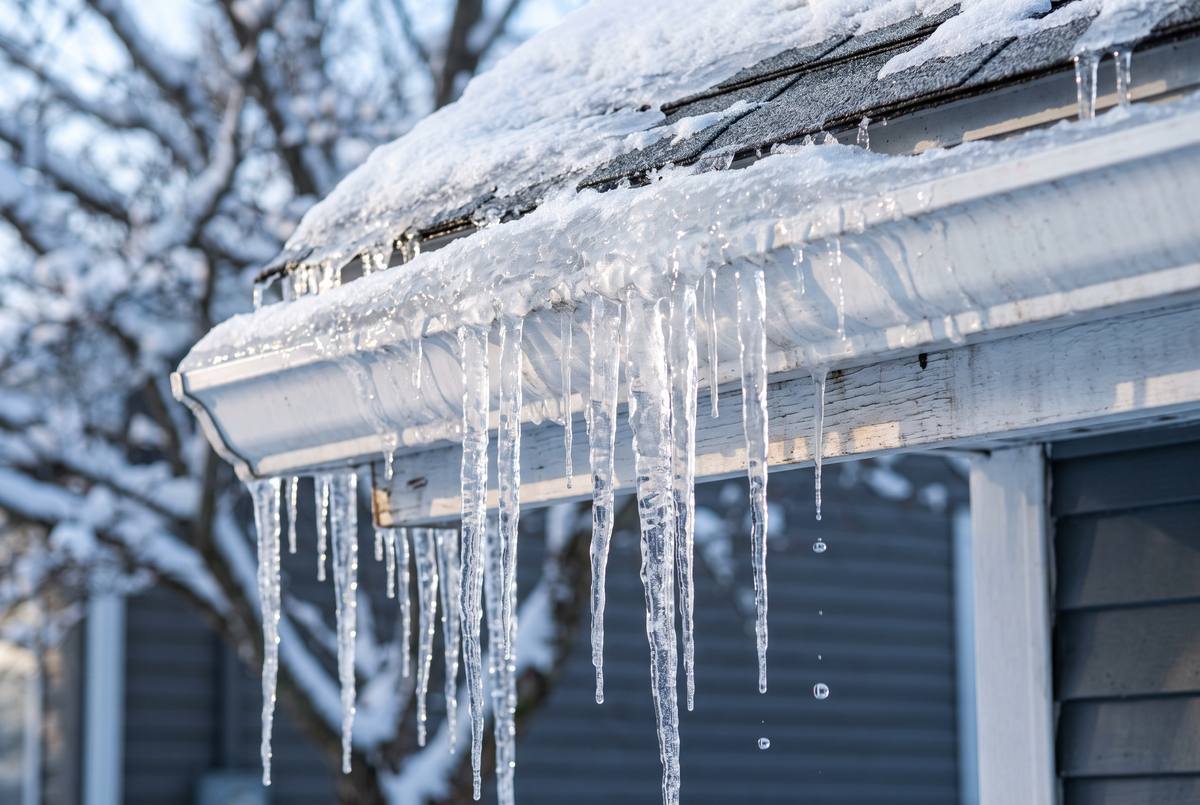
Water runs down to the eave and refreezes
The overhang hangs past the warm house and stays frozen. The water hits that strip and builds a ridge.
The ridge holds a pool
Shingles shed water running downhill. They don't hold standing water. It backs up under them.
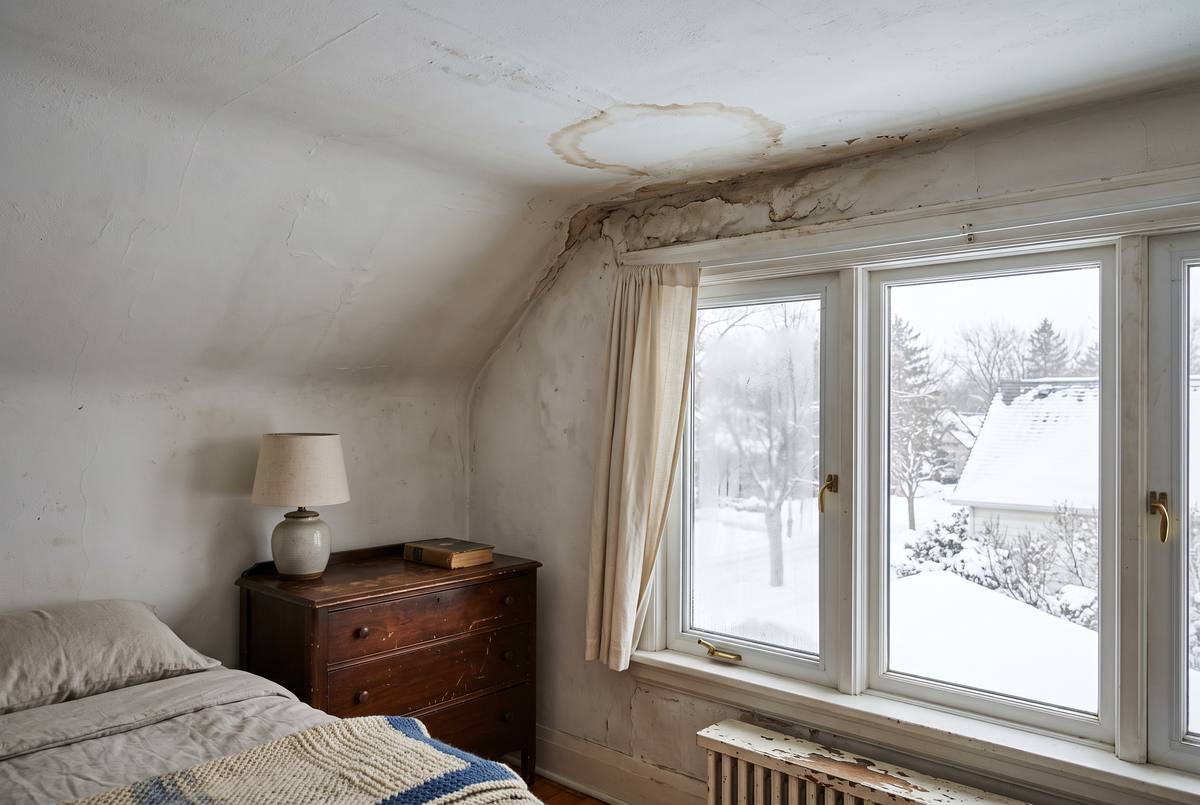
The ceiling pays for it
Wet insulation, a stained bedroom ceiling, a gutter torn off the fascia, icicles over the front door.
The whole drainage path
Roof-only cable moves the dam into your gutter.
Water has to get all the way to the ground. We design the full path for your roof: eave, valleys, dormers, gutters, downspouts.
- 1Roof edge. Cable zig-zags on the first 3 to 6 feet, below the snow.
- 2Gutter. One run the full length.
- 3Downspout. Cable goes down inside it to the ground.
- 4Sensor. Turns it on when it's cold and wet.
Same output at 30°F and at -10°F
- Roof edge only, so the downspout still freezes
- On a switch nobody remembers to flip
- Can't be overlapped without overheating
Self-regulating cable on a sensor
- Output rises as it gets colder, drops as it warms, foot by foot
- Runs only when it's below freezing and wet
- UL-listed cable on a dedicated GFCI circuit we wire ourselves
Straight answer
When you don't need us
Skip the cable if
- Your attic is open, insulated, and air-sealed
- The roof is a simple gable, no valleys or dormers
- You've never had icicles or a ridge of ice at the gutter
Spend the money on the attic. We'll tell you that at the site visit.
Cable is the practical fix for
- Finished third floors and cathedral ceilings
- Tudors and capes with valleys and dormers
- Deep north-facing overhangs
- Slate and metal roofs that can't be easily retrofitted
Not sure which you are? The Ice Risk Evaluator takes a minute.
Free on-site assessment
We measure eaves, gutters, and downspouts, look at last winter's trouble spots, and check where power is.
Three written options
Good, better, best coverage for your roof. No pressure. Comparing options? The System Finder shows what each one covers.
One-day install on most homes
Manufacturer clips that grip the shingle edge, no nails through the roof. Circuit included.
It runs itself
The sensor turns it on when it's cold and wet. You don't touch it.
Service area
Greater Cleveland, about 30 miles from downtown
- Cleveland
- Lakewood
- Parma
- Shaker Heights
- Cleveland Heights
- Strongsville
- Westlake
- Rocky River
- Mentor
- Solon
- Avon
- Bay Village
- Berea
- Broadview Heights
- North Olmsted
- Euclid
Not on the list? Call. If the address is inside the ring, we come out.
What causes ice dams on a roof?
Three things together: snow on the roof, heat leaking from the attic, and an eave that stays below freezing. The heat melts snow from underneath, the meltwater refreezes at the cold overhang, and every thaw-freeze cycle adds a layer. Cleveland's swings above and below freezing from December to March are the ideal pattern for building one.
Does heat cable actually prevent ice dams?
Yes, on the sections it covers, when the layout is right. The cable keeps a melt channel open along the roof edge, through the gutter, and down the downspout so water reaches the ground instead of refreezing at the eave. It manages the freeze at the edge; it does not fix attic heat loss, and we say so on every site visit.
Why do I need cable in the gutters and downspouts, not just on the roof?
Because the water has to go somewhere. Roof-only cable melts a channel, the meltwater reaches the gutter, hits a frozen downspout, and refreezes right there. You've moved the dam from the roof into the gutter. A full path keeps the water moving until it's on the ground.
Does roof heat cable raise my electric bill?
Some, during cold wet stretches. Self-regulating cable draws less as it warms, and the sensor keeps it off on dry days, so the cost is a fraction of what constant-wattage tape running all winter would use. Most homeowners see a modest seasonal bump, not a shock. Compare it to one ceiling repair.
Will the cable be visible from the street?
A little, if you look for it. It's a dark cable in a tight zig-zag on the first few feet of roof, clipped flat. On most homes people never notice it. On metal roofs or high-visibility eaves we can use a low-profile heated panel instead.
Is heat cable a fire hazard?
Self-regulating cable that is UL listed, installed on a dedicated GFCI-protected circuit, with proper end seals and splices, is not. The fires you read about involve constant-wattage tape overlapped on itself, damaged or aged tape, or an extension cord run out a window. Those are exactly the things a professional install avoids.
How much does heat cable installation cost?
It depends on the roof, so there's no flat number. What drives it: how many feet of eave need coverage, how many downspouts, whether valleys or dormers need runs, the voltage the run length calls for, and the controller type. The on-site assessment is free, and the proposal comes as three options so you can pick the coverage that fits.
How long does installation take?
Most single-family homes are done in one day, including the electrical circuit. Larger homes, multi-building properties, and commercial jobs are scheduled in phases. We confirm the timeline in the proposal.
When is the best time to install heat cable?
September through November, before lake-effect season starts and before cable stock runs short in December. If you already have a dam, call anyway; we can assess now and plan the install around the weather.
When don't I need heat cable at all?
If your attic is well insulated and air-sealed, the roof is a simple gable with no valleys or dormers, and you've never had icicles or a ridge of ice at the gutter, you probably don't. Spend the money elsewhere. If any of those isn't true, run the Ice Risk Evaluator or have us look.
Book before the first freeze.
September to November is install season. By December cable stock runs short and the roof is icy. If you already have a dam, call today.
Find us